
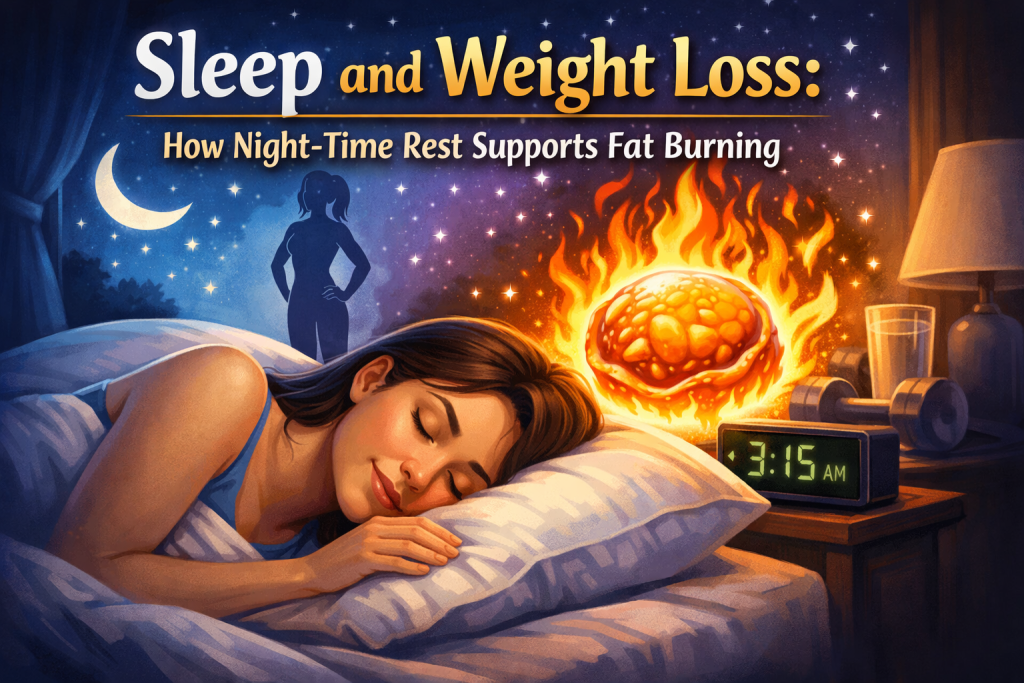
Sleep and Weight Loss: How Night-Time Rest Supports Fat Burning
Sleep and weight loss are closely connected, yet many people overlook this relationship.
Most weight loss plans focus on calories, exercise, or restrictive diets.
However, the quality of sleep you get each night can strongly influence how your body stores and burns fat.
This article explains how sleep affects metabolism, hormones, and energy balance.
It also explains why improving sleep habits can support long-term weight management.
Understanding the Connection Between Sleep and Weight Loss
Sleep is not simply a time when the body shuts down.
During sleep, the body performs essential repair and regulation processes.
Hormones that control hunger, stress, and fat storage are adjusted during rest.
When sleep is poor, these systems can become unbalanced.
This imbalance may lead to increased appetite, lower energy, and slower metabolism.
Why Sleep Matters More Than Most People Think
Many people assume weight gain happens only because of food choices.
In reality, sleep quality influences those food choices.
When sleep is short or disturbed, the body seeks quick energy.
This often results in cravings for sugary or high-calorie foods.
Over time, these patterns can affect body weight.
How Night-Time Metabolism Works
Metabolism continues while you sleep.
The body uses this time to regulate energy use and repair tissues.
Night-time metabolism focuses more on recovery than activity.
Deep sleep stages are especially important for this process.
Deep Sleep and Fat Processing
Deep sleep supports hormone balance.
It helps regulate insulin sensitivity and fat storage signals.
When deep sleep is reduced, these processes may become less efficient.
Consistent, uninterrupted sleep supports better metabolic balance.
Poor Sleep and Its Effect on Weight Gain
Poor sleep affects several hormones linked to weight.
Ghrelin, the hunger hormone, increases when sleep is limited.
Leptin, the hormone that signals fullness, decreases.
This combination can lead to overeating without realizing it.
Stress Hormones and Fat Storage
Lack of sleep increases cortisol, the stress hormone.
High cortisol levels are linked to increased fat storage.
This effect is often most noticeable around the abdomen.
Managing sleep quality helps reduce long-term stress signals.
Sleep Quality Versus Sleep Duration
Many people focus only on how many hours they sleep.
Sleep quality is just as important.
Interrupted sleep can reduce the benefits of rest.
Waking frequently during the night disrupts hormonal balance.
Both duration and quality matter for weight management.
Signs of Poor Sleep Quality
Feeling tired despite sleeping enough hours.
Difficulty concentrating during the day.
Increased cravings for quick energy foods.
Low motivation for physical activity.
How Better Sleep Supports Fat Burning
When sleep improves, energy regulation improves.
Balanced hormones support better appetite control.
Stable energy levels support daily movement.
These factors work together to support fat burning over time.
The Role of Consistent Sleep Schedules
Going to bed at the same time each night supports circadian rhythm.
This rhythm helps regulate metabolism.
Irregular sleep schedules confuse the body.
Consistency helps the body anticipate rest and recovery.
Evening Habits That Support Weight Loss
Evening routines strongly affect sleep quality.
Late meals can disrupt digestion.
Bright screens delay melatonin production.
Stressful activities increase mental stimulation.
Simple Evening Routine Adjustments
Reduce screen use before bedtime.
Eat lighter meals in the evening.
Create a calm pre-sleep routine.
Keep the bedroom cool and dark.
How SleepLean Fits Into a Sleep-Focused Routine
SleepLean is designed to support night-time relaxation and balance.
It is used as part of a consistent sleep routine.
SleepLean does not replace healthy habits.
It complements efforts to improve sleep quality.
Using SleepLean Responsibly
SleepLean is taken according to label instructions.
Consistency matters more than short-term use.
It works best alongside good sleep hygiene.
However, weight management is not only about calories.
In many cases, sleep habits shape daily food choices.
Because of this, people who sleep better often eat more mindfully.
Over time, these small habits support healthier body composition.
Most importantly, better sleep makes long-term routines easier to follow.
Long-Term Weight Management and Sleep
Weight management is a long-term process.
Quick fixes rarely deliver lasting results.
Sleep-focused strategies support sustainability.
Better sleep supports daily habits that influence weight.
Why Sustainable Habits Matter
Extreme dieting increases stress.
Stress disrupts sleep.
Poor sleep affects weight.
Balanced routines break this cycle.
Frequently Asked Questions
Can improving sleep alone help with weight loss?
Better sleep supports hormonal balance and energy control.
It works best alongside healthy eating and activity.
How long does it take to notice changes from better sleep?
Sleep improvements may take several weeks.
Results vary between individuals.
Is SleepLean a replacement for diet and exercise?
No.
It supports sleep routines but does not replace lifestyle choices.
Conclusion
Sleep and weight loss are deeply connected.
Ignoring sleep can slow progress even with good diet and exercise.
Improving sleep supports metabolism, appetite control, and daily energy.
Sleep-focused routines offer a realistic path to long-term weight management.
Visit the Official SleepLean Website to Learn More
Disclaimer
This article is for informational and educational purposes only.
It does not provide medical advice, diagnosis, or treatment.
Always consult a qualified healthcare professional before making decisions related to health, diet, or supplements.
This article contains affiliate links. If you purchase a product through these links, the website owner may earn a commission at no additional cost to you.
Results may vary from person to person.